Ferries to Germany
Stena Line, Color Line, Scandlines, TT Line, Finnlines & DFDS Seaways operate the ferries to Germany.
Germany Ferry Times
Ferries to Germany sail approximately 69 times daily and up to 464 times weekly. Ferry times can vary by season and operator. Use our deal finder to compare routes and prices.
Germany Ferry Ports
Ferries sail to 4 ports in Germany. The most popular ferry port in Germany is Rostock ferry port with around 113 weekly sailings.
Ferries from Trelleborg to Rostock
The Trelleborg Rostock ferry sails 6 times a day and up to 42 times a week, with a crossing time of 6 hours 15 minutes. The average price of a ferry from Trelleborg to Rostock ferry is about € 210.58. Exclusive of booking fees.
Ferries from Rodby to Puttgarden
The ferry from Rodby to Puttgarden sails 46 times a day and up to 322 times a week, with a duration of 45 minutes. On average the Rodby Puttgarden ferry costs about € 116.94. Exclusive of booking fees.
Pricing is taken from searches over last 30 days, last updated April 01.
Is there a car ferry to Germany?
Car ferries do sail to Germany. Stena Line, Color Line, Scandlines, TT Line & Finnlines offer car ferries to Germany. A car ferry may not be available on all routes, we recommend viewing our Deal Finder for the latest car ferry information and pricing.
Germany Ferry Prices
The price of a ferry to Germany can range by route, operator, vehicle type, number of passengers and season. We recommend booking in advance to get the best price and availability.
How to book ferry tickets to Germany
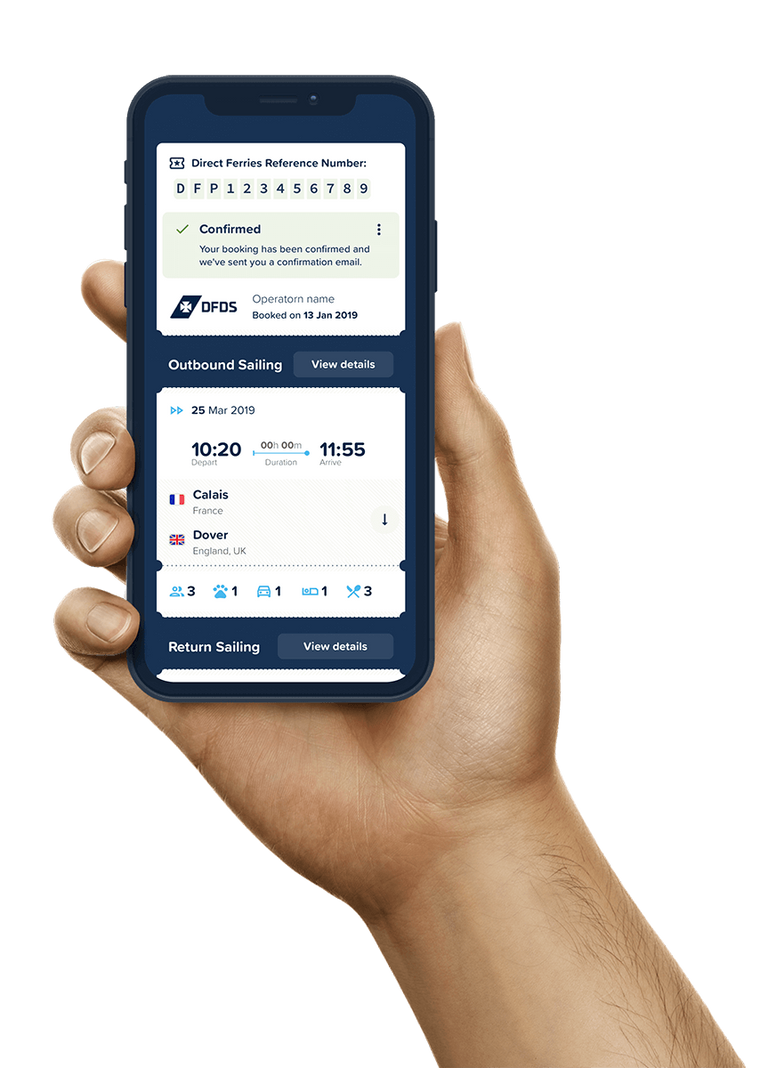
Booking ferries to Germany is easy. Book online and manage your trip with Direct Ferries. Use our Deal Finder to compare tickets and book the best option for you.


 Euro
Euro
 US Dollars
 Euro
Euro
 US Dollars